Tuesday, August 14, 2018

What The Future Holds For Smartphone Technology

Smartphone technology has evolved greatly over the last five years. Features that seemed otherworldly are now in the palm of our hands. These gadgets help us navigate through our daily lives, and it’s almost impossible to leave the house without them.

Design. Smartphone technology incorporates clever designs, almost ergonomic to some. Flagship phones from Apple and Samsung are a mix of fragility and expensiveness. While the design is topnotch and elegant, consumers should either be extra careful with their handling, or mask the beauty of the phones behind cases.

Image source: phoneworld.com.pk

Built-in projectors. The Samsung Galaxy Beam, which was released mid-2010 was the pioneer phone to have a WVGA projector as feature. Future smartphone models are set to have the same feature as brands are venturing in the world of interactive gaming without the need for a TV or computer screen; all consumers will need is a flat surface.

3D screens and holograms. Apple’s Retina Display is still the king in the screen category. However, this peak in smartphone technology will be challenged by 3D screens and holograms. There are a few smartphone models with 3D screens already, and the step after that would be holographic projections.
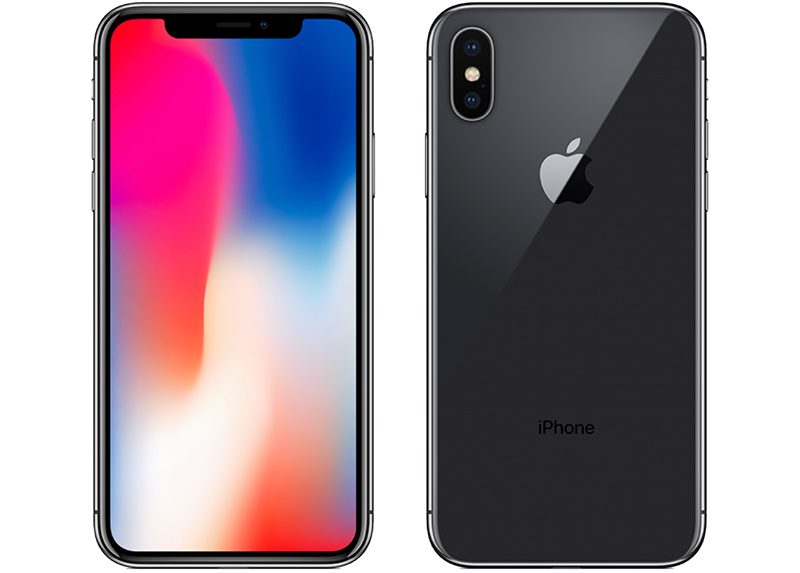
Image source: macrumors.com

Not everyone will be all set for the future of smartphone technology. Some Apple fans were dismayed with the iPhone X’s lack of home button and other awry features, but that won’t stop them from purchasing the latest model the brand has to offer. Android enthusiasts think they’ve seen it all, but after the release of Oppo Find X, they know there’s more to watch out for.

Hi there! My name is Kati Volitich, and I’m a computer engineering student from the University of California, Berkeley. I love all things tech, especially smartphones and computers. For more updates regarding smartphone technology and more, subscribe to my blog.


Thursday, July 19, 2018

Mid-year review: Slickest laptop trends

From the massive machines in the early 2000s to today’s light models, laptops have gone a long way from what they were before in terms of form and function. Every year, people spend millions on their technology, and manufacturers keep on raising the bar just to make sure the purchase was worth it. This year, we’ve seen so far some trends that everyone is shifting to, or at least are being recognized and applied by major brands. Here are the latest in laptop trends. 

Image source: digitaltrends.com

Ultra-thin bezels aren’t new for Dell with its XPS models, and almost every manufacturer is following suit. People are seeing the benefits of having more screen real estate. Smaller bezels mean a smaller body, making laptops smaller but still with a relatively large screen. 

Every brand is stepping up their game with regards to their thin and light gaming laptops. This means more improvement in screen quality, keyboards, GPU performance, and cooling systems. With regards to the screen, everyone is trying to aim for better color accuracy given that the same gaming laptops are being utilized by content creators. And the improved GPU performance and cooling systems reassure gamers and content creators less throttling and faster work speeds. 

Lastly, several laptops have included 4K options when it comes to screens. Of course, this limits the battery life by a margin, but the brightness and color accuracy you get with a 4k panel is simply top notch. 

Image source: digitaltrends.com

I’m Kati Volitich, and I’m computer engineering major at UC Berkeley. I ’ve always been curious about technology, and these days, the fascination has n’t waned, as I can’t wait to get my hands on the latest gadgets in the market. For more reads on today’s technology, click on this link.

Thursday, July 12, 2018

Essential Skills Software Developers Need

Software developers or engineers are a primary reason people can enjoy computers, smart phones, and other similar devices that are used for personal consumption or in the workplace. Because of this, software developers will always be needed.

Image source: 10xu.com


Those interested to become one would have to attain the following skills:

Technical skills: Of course, the foremost qualification that every software developer should have are technical skills revolving around programming or writing codes.

Problem-solving: Software development is all about solving problems, because programs or applications are designed to provide solutions for wide-scale and small-scale user problems. It is for this reason that programmers need to continue practicing their craft.

Initiative to learn: The field of software development is in constant flux. Those who practice this profession should always aspire to acquire knowledge and learn the latest in the market, technologies, and technologies.

Working with other people: Writing codes may be an individual undertaking, but software developers rarely work on a program or system on an individual basis. Most of the time, they have to collaborate with others, thus, they should learn how to communicate properly and share responsibilities with teammates.

Image source: directworksmedia.com


Attention to detail: Even a single syntax error can infect a program with bugs. Attention to detail is then necessary. Software developers must be able to locate and identify even the smallest mistakes in the code.

Career opportunities abound for computer engineers; and one of the options is software development. If you want to read more about the field, follow me, Kati Volitich, on .

Wednesday, May 23, 2018

Teaching Aide: How Laptops Promote Classroom Learning

Image source: Pixabay.com
Studies point to the role of laptops in helping students achieve their full academic potential. A 2016 Michigan State University study, for instance, probed the nearly 100 studies of the use of laptops in the classroom and found that when provided with laptops for use in the school and at home, students improved their learning in subjects such as math, science, and English. They got more feedback on their writing, and they edited and revised their
school papers more often.

Here are several ways that laptops foster a better learning environment in school.

It makes room for new teaching methods: One such technique is the flipped classroom model, wherein students watch lectures at home on their laptops and then discuss their learnings with their teachers and peers in class. Using computers, teachers can personalize academic instruction more, giving students more options to explore in honing their learning.

Fosters online collaboration: Laptop use provides curriculum support and online collaboration among students, making learning more fun and interesting especially among the tech-savvy ones. As a result, students’ computer skills are also honed and improved.

Image source: Pixabay.com
Smoothens the learning process: Laptops help teachers and students alike keep track of assignments and projects. These gadgets allow students to receive, view and submit their work online via email rather than having to print them out and shortens the review process as teachers can return assignments and provide feedback digitally.

Helps teachers: Instructors can take notes in a common document or an online program for sharing with each other, and they can browse the web for important resources and training materials to enrich the classroom discussions.

Kati Volitich is a twenty-something-year-old gal who loves all things tech and is currently working on her degree in Computer Engineering at UC Berkeley. More on Kati here.